Groundbreaking Research by CTOR Explores the Connection Between Bite, Facial Growth and Breathing
NEW YORK, Aug. 17, 2026
Press Release Disclaimer: This is a press release distributed through the XPR Media network. It has not been independently verified by our newsroom.

Groundbreaking Research by CTOR Explores the Connection Between Bite, Facial Growth and Breathing
PR Newswire
NEW YORK, Aug. 17, 2026
NEW YORK, Aug. 17, 2026 /PRNewswire/ — For many years, scientists and clinicians have studied the nasal and oral cavities separately. In fact, it is commonly accepted that if you have a breathing problem or nasal septum deviation, you visit an ENT specialist, while if you have any jaw and dental deformity, you consult an orthodontist. But is this the correct approach?
A research breakthrough supports the idea that the mouth and nose develop as part of the same biological system. Not only can nasal cavity development affect jaw growth and facial form and function, but jaw development can have a reciprocal, and striking, effect on nasal cavity form and function.
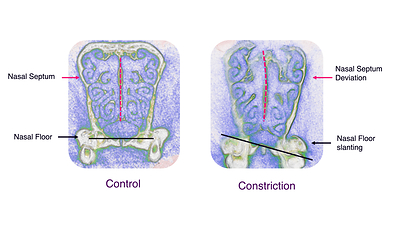
A study conducted by CTOR scientists, and recently published in the Journal of Clinical Medicine, demonstrated that inadequate growth of the upper jaw can significantly affect nasal cavity development and alter the nasal floor angulation, which contributes to nasal septal deviation. This is a very important discovery from many perspectives.
Narrow jaws are a developmental problem with serious consequences
Scientists have been puzzled by the rising prevalence of constriction or narrowing of the upper jaw (or maxilla). Why is the maxilla’s transverse dimension decreasing? Some believe it is an evolutionary trend, while others believe it may be genetically determined due to population mixing. However, these two factors can only influence the size of the jaws over a long period of time, spanning thousands of years. Therefore, evolution cannot explain the recent increase in maxillary constriction prevalence.
Now new research from CTOR shows that maxillary constriction is a developmental problem that can be prevented by early intervention during a child’s growth. Allergies, chronic diseases, enlarged tonsils or adenoids, and habits are among the factors that can significantly contribute to the development of a narrow maxilla. This view is also held by many scientists who report that the rapid trend towards narrower jaws coincided with industrialization and the softer processed foods in the diet, which reduced chewing forces. Lack of jaw growth can be associated with insufficient space for all teeth, development of crowding, and a significant inpairment of the airway leading to sleep apnea. Furthermore, a crossbite associated with a narrow maxilla may cause the lower jaw (or mandible) to shift to one side during function resulting in facial asymmetry.
A narrow maxilla results in nasal floor and septum asymmetries
CTOR scientists demonstrated that maxillary constriction that is associated with a shift of the mandible to one side, not only changes jaw function, but produces forces that can tilt the nasal cavity floor, which in turn can cause nasal septum deviation. This is extremely important considering that nasal septum deviation is a main cause of nasal obstruction and mouth breathing.
Nasal obstruction impairs maxillary and mandibular development
A narrow maxilla can contribute to nasal septum deviation, resulting in nasal obstruction, which in turn has severe effects on the growth of both the maxilla and mandible. A compromised nasal airway in patients of any age can result in chronic mouth breathing, which contributes to narrow jaws, increased facial height, open bite, speech problems, and other changes in facial growth and jaw development that then lead to poor sleep quality and negative overall well-being. This CTOR study helps clinicians and scientists better understand the biological mechanisms in this vicious cycle linking the bite, jaw development and airway anatomy.
Chewing forces can affect the nasal septum
Building on this work, CTOR scientists in collaboration with European colleagues, have discovered that an individual’s everyday bite and chewing function can significantly affect the structure of the nasal septum. The cartilage of the nasal septum is very important in preventing injuries to the rest of the skull by acting as a shock absorber for chewing forces. In an article recently published by the European Journal of Medical Research, scientists demonstrated that, in the absence of incisor bite forces, as observed in open-bite cases, a significant portion of this cartilage is replaced by bone, thereby reducing the protective effect of the nasal septum cartilage. These findings suggest that the forces created during normal chewing may play a greater role in facial and nasal development than previously thought.
Together, these CTOR studies support the idea that the mouth and nose development are closely connected. Rather than functioning and growing independently, changes in one structure may significantly influence the other over time
Good News
The good news is that just as different factors can affect maxillary development and cause constriction with dire consequences, clinicians can correct a narrow maxilla with simple orthopedic appliances, such as maxillary expanders. An expander can re-establish normal maxillary width and correct nasal septum deviations and asymmetric jaw development in children.
These CTOR recent publications reinforce the importance of early diagnosis and Interceptive Orthodontics & Dentofacial Orthopedics treatment to normalize face, jaw and dental development for optimal oral function and airway health in children and teenagers.

 View original content to download multimedia:https://www.prnewswire.com/news-releases/groundbreaking-research-by-ctor-explores-the-connection-between-bite-facial-growth-and-breathing-302852986.html
SOURCE CTOR