SeatGeek Launches “Ask SeatGeek” Bringing Conversational AI Search to Its Marketplace
Built on 17 years of verified, seat-level data, Ask SeatGeek brings the company's AI intelligence layer directly to fans
Press Release Disclaimer: This is a press release distributed through the XPR Media network. It has not been independently verified by our newsroom.


SeatGeek, the technology company that has put data at the center of the live event experience from day one, today announced the launch of Ask SeatGeek, a conversational AI search experience built directly into the SeatGeek marketplace. Fans can now turn search into a conversation, describing what they’re looking for the way they’d describe it to a friend, such as “cheapest club seats for weekday Mets games” or “popular outdoor concerts this week under $100” and get a complete, tailored answer.
This press release features multimedia. View the full release here: https://www.businesswire.com/news/home/20260826992435/en/
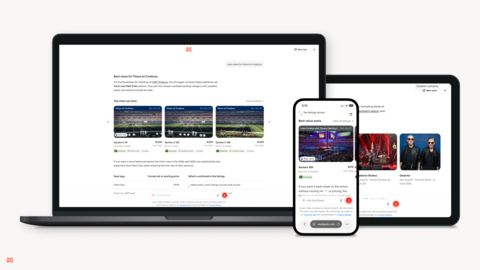
The launch builds on a first-mover position in conversational AI. In March 2026, SeatGeek became the first ticketing platform to bring both official primary tickets and resale inventory into a single ChatGPT experience, putting conversational ticket search in fans’ hands and establishing SeatGeek as an early leader in AI-powered ticket discovery. SeatGeek has since brought that same intelligence to Google’s agentic AI search experience and to Spotify, extending its reach to wherever fans are already asking questions. Ask SeatGeek now brings that intelligence layer directly into SeatGeek’s marketplace, putting nearly two decades of verified, seat-level data to work answering fans’ questions inside the platform.
Ask SeatGeek lives inside SeatGeek’s existing search bar rather than sitting off to the side as a separate chatbot. Simple queries return the fast, direct results fans expect. As questions get more complex, fans are guided into the full Ask SeatGeek experience at seatgeek.com/ask, where answers are assembled from SeatGeek’s interactive maps, view-from-seat imagery, Deal Score and seat-level perks data.
“We’ve spent 17 years organizing the details that matter when someone chooses a ticket—from price and location to sightlines and seat perks,” said Jack Groetzinger, co-founder and CEO of SeatGeek. “Ask SeatGeek gives fans a simpler way to use that information: ask a question in their own words and get an answer they can act on.”
Answers You Can Shop
Ticket buying involves a lot of variables at once: price, sightlines, who you’re going with, what’s included, what else is happening that weekend. Traditional search interfaces make fans check each one separately.
Ask SeatGeek allows fans to consider all of those variables at once, turning a series of filters into a single, intuitive and visual conversation. Every response is built from the information SeatGeek has spent years assembling and verifying: interactive seat-level maps, photo-realistic view-from-seat imagery, Deal Score pricing context, seat perks and user-generated fan tips. Fans can keep refining conversationally until they land on the right seats, then check out in the same SeatGeek flow they already trust.
What This Means for Fans
- Ask the question you actually have. Fans can search across price, location, sightlines, timing and amenities in a single request instead of filtering one dimension at a time.
- See the answer, not a description of it. Responses arrive as maps, real seat imagery and live listings rather than paragraphs of text.
- Keep going until it’s right. Follow-up questions build on the last answer, so narrowing down feels like a conversation instead of a new search.
- Surface what you didn’t know to ask. Ask SeatGeek can proactively point out perks fans wouldn’t think to search for, like a seat with extra padding, a section with food and drink included, or a fan tip such as “this is a good spot to catch a fly ball,” as they search and browse, not just when asked.
- Buy with the same confidence. Checkout happens in the SeatGeek marketplace fans already know, backed by verified inventory and the SeatGeek Buyer Guarantee.
What This Means for Teams and Venues
- Richer representation of inventory. Partner events surface with the full context fans need to buy confidently, well beyond a price and a section number.
- Discovery beyond traditional search. Fans often start broad, before they know an artist, date or venue to type – “what are upcoming popular outdoor concerts near me?” A traditional search field has no box for “popular” or “outdoor.” Ask SeatGeek can answer that question.
- Built on verified data. Answers draw on SeatGeek’s curated live event content with human oversight of data quality, not scraped or synthesized information.
- A platform that compounds. Every map, verified view and fan tip added to the SeatGeek dataset makes every future answer better, and every rightsholder benefits from a marketplace that gets smarter with each transaction.
Where This Goes Next
Most AI shopping tools today are good at retrieving facts. Ask what’s available and you get back seats and prices. Retrieval is only the first chapter of AI-powered commerce. The larger opportunity is personalization, and it’s one SeatGeek is unusually well positioned for after 17 years of understanding how fans actually choose seats.
A fan’s history holds real signal: where they sat last time, whether they gravitate toward shade on a summer afternoon, whether they’re buying for a family or for a client. Over time, that context can shape the answer itself, so that two fans asking the same question get recommendations suited to each of them. SeatGeek sees this as the direction conversational commerce is heading, and Ask SeatGeek is the foundation the company is building it on.
Ask SeatGeek is beginning to roll out now to desktop and mobile web users at seatgeek.com/ask and through SeatGeek’s search bar, with availability on iOS and Android apps to follow.
ABOUT SEATGEEK
SeatGeek was founded in 2009 when three live event fans had the crazy idea that modern technology could improve the live event-going experience for everyone—fans, teams and artists. Today, SeatGeek offers a trusted marketplace for fans to easily buy and sell tickets to the events they love and provides primary box office technology for some of the most prominent names in sports and entertainment globally.
View source version on businesswire.com: https://www.businesswire.com/news/home/20260826992435/en/
Media gallery