Employer Fertility Stop-Loss Insurance Market Forecast To Hit $2.47Billion By 2030 Amid Strong Industry Growth
The Business Research Company’s Employer Fertility Stop-Loss Insurance Global Market Report 2026 – Market Size, Trends,
Press Release Disclaimer: This is a press release distributed through the XPR Media network. It has not been independently verified by our newsroom.

The Business Research Company’s Employer Fertility Stop-Loss Insurance Global Market Report 2026 – Market Size, Trends, And Forecast 2026-2035
LONDON, GREATER LONDON, UNITED KINGDOM, September 17, 2026 /EINPresswire.com/ — The employer fertility stop-loss insurance sector is witnessing significant momentum as organizations increasingly seek ways to manage the financial risks linked to employee fertility benefits. This market’s evolution reflects broader shifts in workforce demographics, healthcare trends, and technological advancements that shape how reproductive health is supported within corporate benefits programs.
Projected Growth and Market Size of Employer Fertility Stop-Loss Insurance
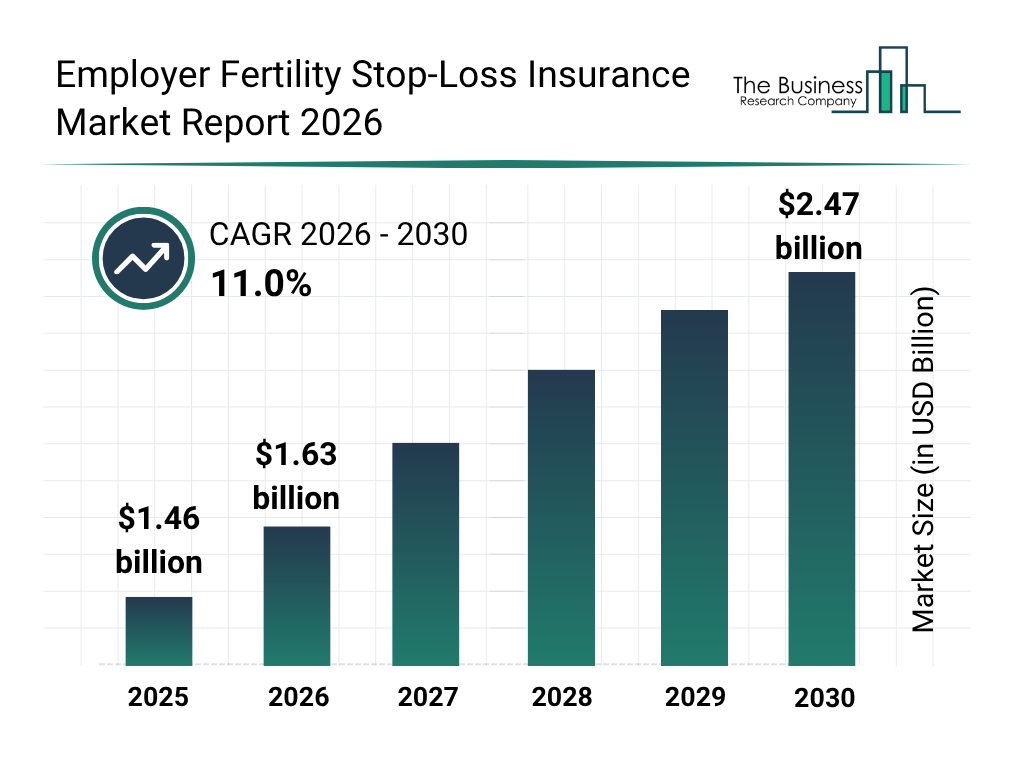
The employer fertility stop-loss insurance market has expanded swiftly in recent years and is projected to rise from $1.46 billion in 2025 to $1.63 billion in 2026, marking a compound annual growth rate (CAGR) of 11.4%. This surge in the historical period has been driven by multiple factors including increasing infertility rates among working-age adults, greater emphasis from employers on wellness benefits, wider adoption of assisted reproductive technologies, rising healthcare inflation, and broader penetration of corporate health insurance plans. Looking ahead, this market is expected to continue its rapid ascent, reaching $2.47 billion by 2030, supported by an 11.0% CAGR. The forecast growth will be fueled by the growing use of fertility benefits as a tool for talent retention, heightened awareness around reproductive health coverage, the rise of personalized insurance products, demand for cost containment in self-funded employer plans, and advancements in predictive healthcare risk analytics.
Download a free sample of the employer fertility stop-loss insurance market report:
https://www.thebusinessresearchcompany.com/sample_request?id=88678940&type=smp&name=Employer%20Fertility%20Stop-Loss%20Insurance%20Market%20Report%202026&utm_source=EINPresswire&utm_medium=paid&utm_campaign=Sep_PR
Understanding Employer Fertility Stop-Loss Insurance and Its Purpose
This market segment specializes in insurance solutions designed to protect employers from substantial financial exposure related to employee fertility treatment claims. These treatments include in-vitro fertilization (IVF), egg freezing, and various reproductive healthcare services. By offering coverage that manages the high costs associated with fertility benefits, employer fertility stop-loss insurance assists companies in expanding healthcare offerings to employees while maintaining control over escalating expenses.
Healthcare Inflation as a Major Factor Influencing Market Expansion
One of the primary factors propelling the growth of the employer fertility stop-loss insurance market is ongoing healthcare cost inflation. This term describes the steady rise in expenses for medical treatments, hospital services, medications, and other healthcare provisions. The increasing use of assisted reproductive technologies, which often require multiple complex treatment cycles, contributes significantly to these rising costs. Employer fertility stop-loss insurance mitigates financial risks by capping employer liabilities and shifting excess costs to insurers through structured reimbursement arrangements. For instance, in May 2026, data from the US Inflation Calculator indicated that average healthcare costs in the United States increased by 2.5% over the year ending in April, following a 3.1% rise in March. This trend clearly underpins the market’s expansion.
View the full employer fertility stop-loss insurance market report:
https://www.thebusinessresearchcompany.com/report/employer-fertility-stop-loss-insurance-market-report?utm_source=EINPresswire&utm_medium=paid&utm_campaign=Sep_PR
Impact of Growing Female Workforce Participation on Market Demand
The rising participation of women in the workforce is another key driver for the employer fertility stop-loss insurance market. This increase refers to the higher proportion of women engaged in employment or actively seeking work, a trend fueled by improved educational opportunities and greater inclusion across various industries. Employer fertility stop-loss insurance plays a crucial role in supporting this demographic by helping companies manage the financial risks tied to fertility benefits, thereby aiding employee retention and enhancing access to reproductive healthcare. According to the Organization for Economic Co-operation and Development (OECD), as of April 2024, the labor force participation rate for women aged 15 to 64 in OECD countries reached a record 66.6% in 2023, with female employment rising by 1.0% from 2022 to 63.2%, surpassing the 0.3% growth rate observed among men. This upward trend in female workforce presence is directly boosting demand in the fertility stop-loss insurance sector.
Telehealth Expansion as a Catalyst for Market Growth
The rapid growth of telehealth services is further stimulating the employer fertility stop-loss insurance market. Telehealth encompasses the provision of healthcare through digital means such as video consultations, mobile health applications, and remote patient monitoring. The increasing adoption of these technologies by both patients and providers enhances the convenience and accessibility of reproductive healthcare. Employer fertility stop-loss insurance supports this shift by managing the financial risks associated with the higher utilization of fertility treatments enabled by virtual care options. For example, data from the National Center for Biotechnology Information (NCBI) revealed that the percentage of the U.S. population having at least one telehealth visit grew from 12.05% in 2022 to 12.12% in 2023. This expansion in telehealth access is contributing to the rising demand for fertility-related insurance coverage.
Regional Market Overview for Employer Fertility Stop-Loss Insurance
In terms of regional dominance, North America held the largest share of the employer fertility stop-loss insurance market in 2025. Meanwhile, the Asia-Pacific region is expected to experience the fastest growth rate throughout the forecast period. The market analysis encompasses multiple geographic areas including Asia-Pacific, South East Asia, Western Europe, Eastern Europe, North America, South America, the Middle East, and Africa, providing a comprehensive view of global market dynamics.
New additions to our 2026 reports:
• Market attractiveness scoring and analysis
• Total addressable market (TAM) analysis
• Company scoring matrix graphics and tables
• Excel-based forecasting dashboards
• Market hotspots infographics
• Key technologies and future trend analysis
• Updated graphics and tables
Speak With Our Expert:
Saumya Sahay
Americas +1 310-496-7795
Asia +44 7882 955267 & +91 8897263534
Europe +44 7882 955267
Email: marketing@tbrc.info
The Business Research Company – www.thebusinessresearchcompany.com
Follow Us On:
• LinkedIn: https://in.linkedin.com/company/the-business-research-company
Oliver Guirdham
The Business Research Company
+44 7882 955267
email us here
Visit us on social media:
LinkedIn
Facebook
X
Legal Disclaimer:
EIN Presswire provides this news content “as is” without warranty of any kind. We do not accept any responsibility or liability
for the accuracy, content, images, videos, licenses, completeness, legality, or reliability of the information contained in this
article. If you have any complaints or copyright issues related to this article, kindly contact the author above.

Media gallery