Synthetic vs Natural Sourcing: Insights from a Top 10 L-Theanine Ingredient Supplier from China
XI'AN, SHAANXI, CHINA, August 12, 2026 /EINPresswire.com/ -- For a procurement team building a relaxation supplement or
Press Release Disclaimer: This is a press release distributed through the XPR Media network. It has not been independently verified by our newsroom.
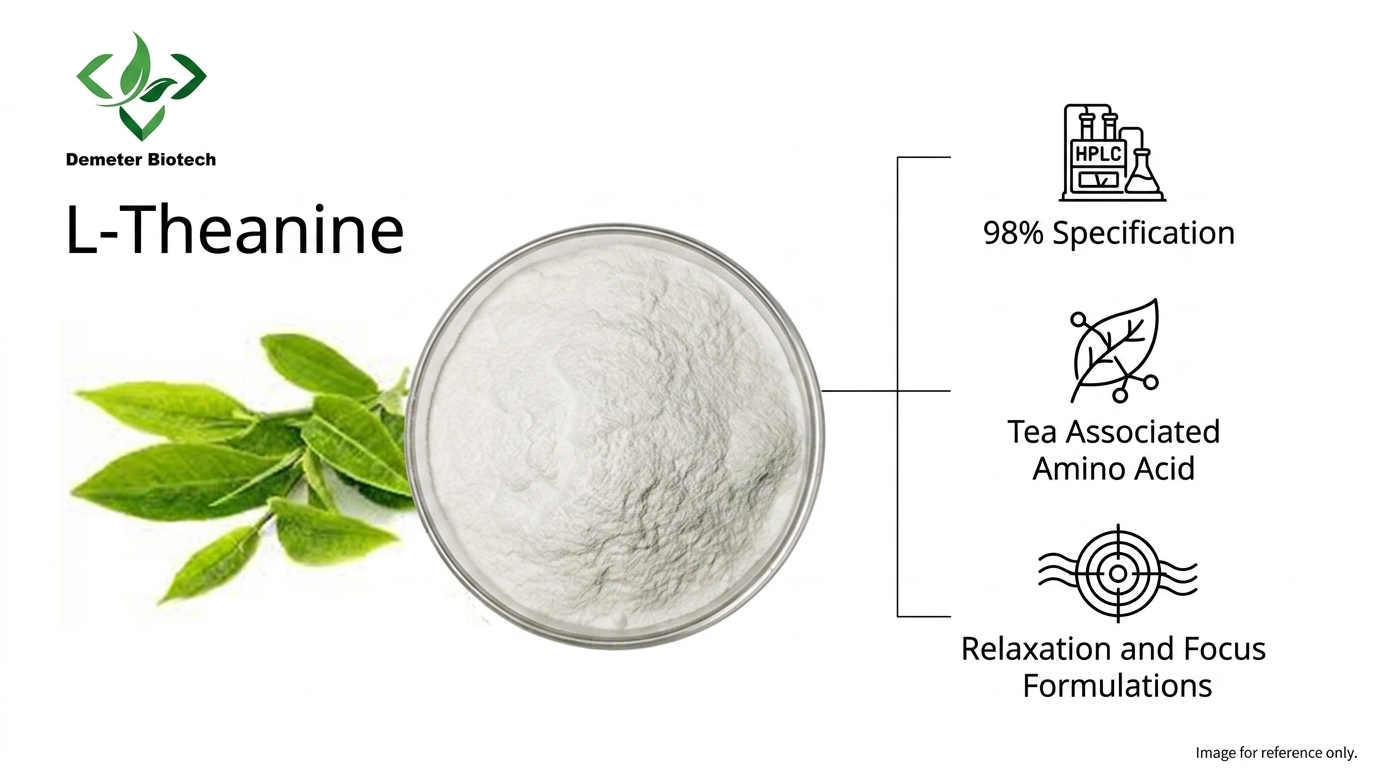

XI’AN, SHAANXI, CHINA, August 12, 2026 /EINPresswire.com/ — For a procurement team building a relaxation supplement or a functional beverage, the first question about L-theanine is rarely about price. It is about proof. Is the ingredient natural or synthetic, and can that claim be documented from batch to batch? L-theanine is an amino acid associated with tea, supplied as a white powder for nutrition supplements, functional drinks, and food formulations, and the sourcing route behind it shapes how a brand labels, audits, and communicates the finished product. As a Top 10 L-Theanine Ingredient Supplier From China, Xi’an Demeter Biotech Co., Ltd. approaches that question by anchoring every conversation in verifiable identity: CAS No. 3081-61-6, a 20%-98% specification range, HPLC testing, and a COA available on request. The point of the comparison is simple. Natural and synthetic are not a ranking of better and worse; they are two sourcing paths that each need to be defined, documented, and matched to the end formulation.
Natural and Synthetic Sourcing Start with a Clear Product Identity
Sourcing differences begin with identity, not marketing language. Before a buyer weighs a natural origin against a synthetic one, the purchasing file should fix the product name, CAS No. 3081-61-6, the 20%-98% specification range, the test method, and the batch documentation. Those details let a phrase like natural sourcing or synthetic sourcing point to a specific material and a reviewable record rather than a vague adjective. A tea-origin narrative can frame the discussion of natural sourcing, while a synthetic route needs a clear manufacturing path and identity data to support its own label and supply notes. Both should avoid substituting a loose natural claim for actual origin, specification, and test records. For Demeter Biotech, the L-theanine listing sits within the amino acids line under food ingredients, and it carries the identifiers that make batch review possible: CAS No. 3081-61-6 for a searchable substance identity, plus HPLC and a COA as the entry point to quality data. For an l-theanine ingredient supplier, that identity-first habit is what lets a natural or synthetic label rest on evidence rather than positioning.
What Natural Sourcing Must Demonstrate Beyond a Tea-Origin Story
The link between L-theanine and tea gives natural sourcing a real material background, but a tea-origin story is not a substitute for verifying the batch that ships. Documentation still has to connect origin, processing information, batch identity, and finished specification into a single closed loop. The value of the natural path is that the origin narrative and the formulation position stay consistent; the difficulty is synchronizing origin evidence, specification targets, and test records to the same lot. For projects that lean on traceability or an origin claim, that record chain decides whether later labeling, customer audits, and market communication line up. Demeter Biotech describes theanine as an important amino acid found in tea, which gives the natural narrative a product-level starting point. The company classifies the material under amino acids within food ingredients, and it keeps the origin description and the batch file as separate review items, so a sourcing story is never mistaken for a blanket guarantee across every lot.
How Synthetic Sourcing Should Be Evaluated as a Documentation Route
A synthetic sourcing decision cannot rest on cost or name alone either. The manufacturing path, identity information, specification target, test method, and COA should form the core of one supply file, so a buyer can judge whether the material meets the intended label, formulation, and quality-control requirements. When a project chooses a synthetic origin, the priority is not an abstract verdict against natural material; it is putting identity and document completeness first. Consistent origin details, CAS No. 3081-61-6, an HPLC test method, and matching batch records are what give cross-department reviewers a stable basis for sign-off. The comparison, in other words, belongs on documentation completeness and project fit rather than on unproven differences in effect. Working with a bulk L-theanine CAS 3081-61-6 supplier that keeps grade, specification, and lot files aligned prevents the common gap where sourcing terminology drifts away from the paperwork that actually ships with the goods.
A Buyer-Ready Comparison Uses the Same Verification Questions for Both Routes
The most practical comparison applies one set of questions to both routes. Is the product identity clear? Is the specification fixed? Can the test method be explained? Does the COA correspond to the batch? Are packaging and storage details complete? A shared checklist turns a sourcing difference into an operational choice instead of a conceptual debate. For multi-region formulas, private-label programs, or long-term replenishment, the origin decision also has to be weighed against the target market’s labeling strategy and the project’s documentation requirements. Demeter Biotech lists concrete delivery details that support this kind of review: a 1 kg aluminum foil bag, a 25 kg carton, and a 25 kg fiber drum, alongside a COA and a 24-month shelf life. Those specifics give shipment planning and batch management something firm to work from, so identity, specification, test, COA, and packaging move together as a single procurement loop.
Demeterherb Connects Product Records with B2B Supply Support
Company capability and product records play different roles, and a well-run comparison uses both, especially when choosing an l-theanine ingredient supplier for a regulated formulation. Demeterherb serves nutrition supplement, pharmaceutical, cosmetics, and beverage customers across America, Asia, and Europe, and it offers a private label packaging service for every product, which means the sourcing route, batch documentation, and packaging needs should be defined together at the inquiry stage. The company has focused on plant extracts and food ingredients, and it holds EU Organic, USDA Organic, FDA, ISO22000, HALAL, and Kosher certificates, with production run to a national GMP standard and products sold to more than 50 countries and regions. Those credentials support supplier-level due diligence, but they do not replace the origin evidence, specification confirmation, and applicable-grade documents for a single L-theanine lot. Enterprise qualifications and product-level records work in layers: the first backs a supplier background check, and the second supports a specific batch decision. That separation keeps a general certificate from being read as an origin attribute of the ingredient itself.
A sound comparison of natural and synthetic L-theanine returns to what can be verified: the origin description, CAS No. 3081-61-6, the 20%-98% specification range, the HPLC method, the COA, and the packaging record. Those elements support a professional procurement judgment far better than a general preference for one route over the other. That discipline reflects the Demeter Biotech philosophy of being customer-focused, employees-fundamental, and quality-oriented, with product records, batch files, and delivery communication forming the basis of a long-term partnership. To scope L-theanine sourcing routes, specifications, batch COAs, or packaging needs for a specific project, buyers can start a documented inquiry at https://www.demeterherb.com/
Xi’an Demeter Biotech Co., Ltd.
Demeterherb
email us here
Visit us on social media:
LinkedIn
Facebook
X
Legal Disclaimer:
EIN Presswire provides this news content “as is” without warranty of any kind. We do not accept any responsibility or liability
for the accuracy, content, images, videos, licenses, completeness, legality, or reliability of the information contained in this
article. If you have any complaints or copyright issues related to this article, kindly contact the author above.

Media gallery